Gut Health and Weight Loss: What's the Link?
"Gut health" is the wellness phrase of the moment, now often paired with GLP‑1 companion nutrition. Underneath the buzz there is real science about fibre, the microbiome and the hormones that tell you when to stop eating — and a lot of overreach that is worth separating out.
Can gut health affect your weight?
There is a genuine link, though it is easy to overstate. The community of microbes in your gut influences how you extract energy from food, how full you feel, and low-grade inflammation, all of which can nudge appetite and body weight. It is an influence on the edges rather than the main driver, so gut health supports weight management but does not override the need for a calorie deficit.
- Gut microbes affect energy extraction, satiety and inflammation.
- Fibre is the strongest, best-supported lever for gut health.
- It supports weight management, but does not replace a deficit.
Why "gut health" suddenly matters for weight
A few years ago the microbiome was a niche research area. In 2026 it has become mainstream, driven in part by the explosion of GLP‑1 medications and the interest in "companion nutrition" — eating in ways that support the same appetite pathways those drugs act on. The gut is central to that conversation because it is where a lot of appetite signalling actually starts. That makes it a legitimate topic. It also makes it a magnet for exaggeration, with products promising that fixing your gut will melt fat on its own. The truth sits in between, and it is genuinely useful once you strip away the hype.
Your gut is home to trillions of microorganisms, collectively called the gut microbiome. They help digest food you cannot break down yourself, produce certain vitamins and compounds, interact with your immune system, and communicate with your brain. Research consistently finds differences in the microbiome between leaner and heavier individuals, but the arrow of causation is messy: diet shapes the microbiome, the microbiome influences metabolism, and body weight influences both. Rather than getting lost in that tangle, it helps to focus on the handful of mechanisms that are well established and actionable.
Mechanism one: how full you feel
The most practical link between the gut and weight is appetite. When gut bacteria ferment fibre, they produce short-chain fatty acids — compounds like butyrate, propionate and acetate. These can stimulate the release of satiety hormones, including GLP‑1 and peptide YY (PYY), which travel to the brain and signal fullness. In plain terms, a well-fed microbiome helps turn up the body's own "I have had enough" signalling. This is the same GLP‑1 pathway the well-known medications amplify pharmacologically, which is exactly why gut health has become part of the companion-nutrition conversation.
The honest framing is important here. Fibre and a healthy microbiome nudge these hormones; they do not flood the system the way an injected medication does, and the effect is best described as supportive rather than dramatic. But supportive still matters. Feeling satisfied on fewer calories is one of the most useful things that can happen when you are trying to hold a deficit, because the deficit is far easier to sustain when you are not fighting constant hunger.
You cannot out-supplement a diet with no fibre. The single most reliable way to support your gut for weight management is to feed it the plants it evolved to ferment.
Mechanism two: fibre, the underrated workhorse
If there is one hero in this whole topic, it is dietary fibre, and it earns the title through several overlapping effects. It adds physical bulk and slows gastric emptying, so meals feel more filling and stay with you longer. It feeds the beneficial bacteria that produce those short-chain fatty acids. It smooths the rise in blood glucose after eating. And higher-fibre diets are repeatedly associated with easier weight management and better metabolic markers across large populations. Few interventions in nutrition are this well supported and this low-risk.
The catch is that most people fall well short. General guidance points to somewhere around 25 to 38 grams of fibre a day depending on age and sex, and typical intakes are often little more than half that. The fix is unglamorous and effective: more vegetables, fruit, legumes, whole grains, nuts and seeds. If you increase fibre, do it gradually and drink enough water, because a sudden jump can cause bloating and gas while your gut adjusts. This is the part of "gut health" with the strongest evidence and the clearest action — and it costs nothing beyond changing what is on your plate.
Mechanism three: diversity and inflammation
Beyond satiety, the composition of the microbiome seems to matter. A more diverse microbial community, generally fostered by a varied diet rich in different plant foods, is associated with better metabolic health. A microbiome starved of fibre and dominated by the by-products of an ultra-processed diet is linked with more low-grade inflammation, which in turn is tied to insulin resistance and weight gain. Again, causation is not fully untangled, but the practical implication is consistent with everything else: variety and whole foods good, monotony and heavy processing not so good.
This is why "eat thirty different plants a week" has become a popular, if approximate, target. You do not need to hit an exact count. The spirit of it — rotate your vegetables, fruits, legumes, grains, nuts and seeds rather than eating the same three things — is a reasonable, evidence-aligned way to encourage a diverse, fibre-fed microbiome without turning eating into a science experiment.
What about probiotics?
Here is where expectations need managing. Probiotic supplements are heavily marketed for weight loss, but the evidence is mixed and, where present, modest. Some strains have shown small effects on weight or waist circumference in some studies, yet results swing widely by strain, dose and the population studied, and plenty of trials find little or nothing. There is no single "weight-loss probiotic" with robust, repeatable proof. For most people, feeding the bacteria already living in your gut with fibre and fermented whole foods — yoghurt, kefir, sauerkraut, kimchi — is a more dependable strategy than buying a capsule and hoping the strain inside matches your goal.
Where a supplement like LipoPeak fits
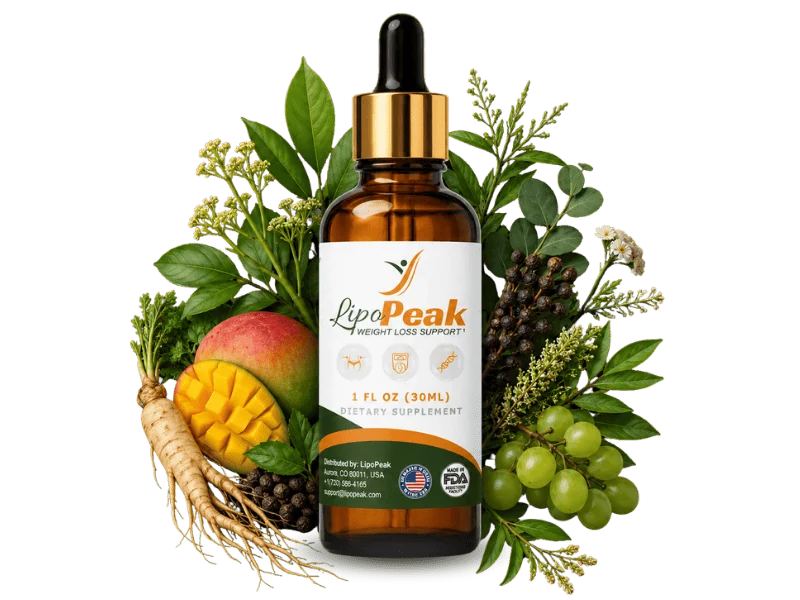
LipoPeak is a thermogenic-style formula built around green tea and cayenne, not a gut or fibre product, so it is not a microbiome intervention and should not be sold as one. If you are interested in the gut-and-weight angle, the heavy lifting is done at the plate: more fibre, more plant variety, fewer ultra-processed foods, and the satiety benefits that follow. A supplement of any kind sits on top of that, at the margins. The most honest way to use one is as a small helper for someone already eating in a way that supports appetite and energy balance — never as a replacement for the fibre and whole foods that do the real work.
What the gut evidence supports, and where it thins out
The most interesting single study here is a mechanism experiment rather than a diet trial. Chambers and colleagues, writing in Gut, delivered propionate — a short-chain fatty acid your gut bacteria make from fermentable fibre — directly to the colon, and found it prevented weight gain, reduced intra-abdominal fat and stopped the decline in insulin sensitivity seen in the control group. That is real evidence that the fermentation products of fibre talk to appetite, and it is the strongest link in the chain between the microbiome and body weight.
The chain is weaker at the supplement end. a 2023 review of extracted and isolated fibres in Appetite pooled 136 human intervention trials and found that most fibre types did not significantly change appetite ratings or energy intake — a useful corrective to the idea that a fibre capsule reproduces a vegetable. And whatever the gut contributes, the strongest single satiety lever remains a macronutrient: The role of protein in weight loss and maintenance describes protein improving fullness and protecting lean mass during a deficit.
The honest reading is that gut health is a supporting condition rather than a mechanism you can buy. Feed it with whole plants, then get the two bigger levers right — protein intake for fat loss for satiety and muscle, and the ranked tools in natural appetite suppressants and the real evidence for hunger. If the hormone side is what brought you here, the ceiling on natural GLP-1 support is the next thing to read.
The honest bottom line
Gut health is a real and interesting piece of the weight puzzle, not a magic key. The credible parts are concrete: fibre and a diverse, plant-fed microbiome support satiety through hormones like GLP‑1 and PYY, smooth blood sugar and are linked to easier weight management. The overhyped parts — that a probiotic or a "gut reset" will melt fat by itself — are not supported. Eat more fibre, eat a wider variety of plants, go easy on ultra-processed foods, and let good gut health make your calorie deficit easier to keep, rather than expecting it to do the job alone.
Sources
- NIH NIDDK — Your Digestive System & How It Works
- NIH NCCIH — Probiotics: Usefulness and Safety
- Mah E, et al. The effect of extracted and isolated fibers on appetite and energy intake: A comprehensive review of human intervention studies. Appetite. 2023. PMID 36216214
- Chambers ES, et al. Effects of targeted delivery of propionate to the human colon on appetite regulation, body weight maintenance and adiposity in overweight adults. Gut. 2015. PMID 25500202
Frequently asked questions
Can gut health affect your weight?
There is a genuine link, though it is easy to overstate. The community of microbes in your gut influences how you extract energy from food, how full you feel, and low-grade inflammation, all of which can nudge appetite and body weight. It is an influence on the edges rather than the main driver, so gut health supports weight management but does not override the need for a calorie deficit.
Does fiber help with weight loss?
Yes, and this is one of the strongest links in the whole topic. Fibre adds bulk and slows digestion so meals feel more filling, it feeds beneficial gut bacteria that produce helpful compounds, and higher-fibre diets are consistently associated with easier weight management. Most people eat far less than the recommended 25 to 38 grams a day, so raising fibre is a high-value, low-risk change.
How does the microbiome influence appetite?
When gut bacteria ferment fibre they produce short-chain fatty acids, which can stimulate the release of satiety hormones such as GLP-1 and PPY that signal fullness to the brain. A diverse, fibre-fed microbiome tends to support steadier appetite signalling, while a diet low in fibre and high in ultra-processed food is linked to weaker satiety. The effect is supportive, not a switch that turns hunger off.
Do probiotics help you lose weight?
The evidence is mixed and generally modest. Some probiotic strains have shown small effects on weight or waist in certain studies, but results vary widely by strain, dose and population, and many trials show little. Probiotics are not a reliable weight-loss tool on their own. Feeding the bacteria you already have with fibre and whole foods tends to matter more than any single supplement.
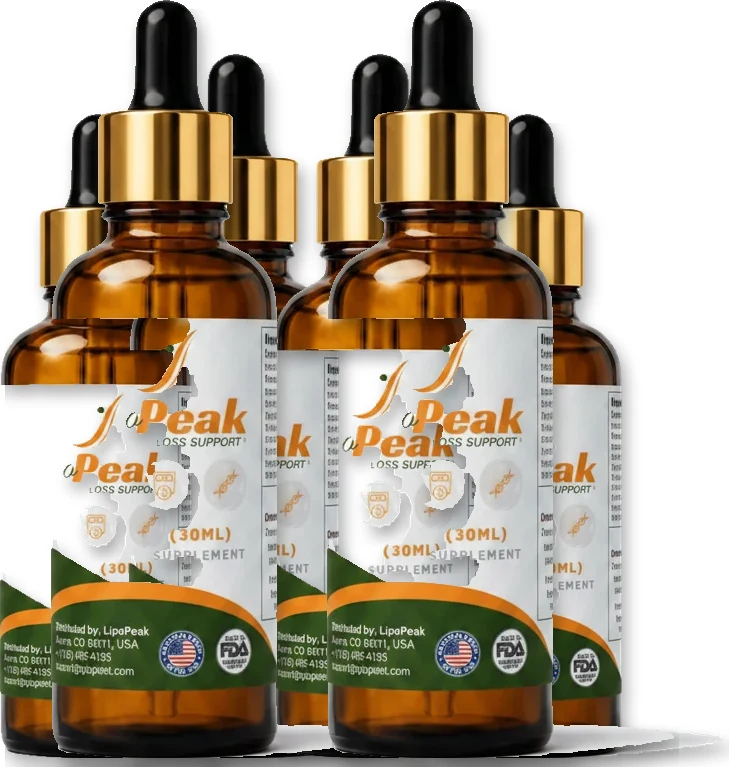
See the full LipoPeak review
The complete ingredient breakdown, the honest limitations, and today's pricing on the official store.
Get Offer