Natural GLP-1 Support: What the 2026 Evidence Shows
GLP‑1 is the hormone behind the most talked-about weight medications of the decade, and a wave of supplements now promises to raise it "naturally." Here is what the 2026 evidence actually supports for berberine, cinnamon, ginger and fermented green tea — and where the marketing outruns the data.
Can natural supplements really support GLP-1?
Some can nudge it, a little. Berberine, cinnamon, ginger and fermented green tea have been studied for modestly influencing GLP‑1 secretion and blood-sugar handling. The effect is real but minor and inconsistent, and no supplement replicates semaglutide or liraglutide. Cost is often 80–90% lower, but results are modest and depend on diet and activity.
- GLP‑1 is a gut hormone that signals fullness and steadies blood sugar.
- Studied natural options give a small, food-level nudge — not a drug-level effect.
- They are cheaper and easier to access, but lifestyle still does the heavy lifting.
What GLP-1 actually is
Glucagon-like peptide-1, or GLP‑1, is a hormone released by cells in the gut after you eat. It does several useful things: it prompts the pancreas to release insulin when blood sugar rises, slows how quickly the stomach empties, and signals fullness to the brain. That combination — steadier blood sugar and a stronger sense of having eaten enough — is exactly why the pharmaceutical versions have been so effective. Prescription drugs such as semaglutide and liraglutide are GLP‑1 receptor agonists: they mimic the hormone and hold that signal at a high, steady level for far longer than your own body ever would after a meal.
The natural-support pitch takes this real biology and asks a reasonable question: if GLP‑1 is so powerful, can food and supplements raise it on their own? The answer is a qualified yes — your body does release more GLP‑1 in response to certain nutrients, and a handful of compounds appear to influence that release. The problem is one of scale. Nudging your natural GLP‑1 up briefly after a meal is a completely different thing from the round-the-clock pharmacological signal a weekly injection provides.
The compounds with the most study behind them
Four ingredients come up most often when "natural GLP‑1 support" is discussed, and each has a different weight of evidence.
Berberine. The most-cited of the group, berberine is a plant alkaloid best known for activating the metabolic enzyme AMPK and improving glucose handling. Some laboratory and small human work suggests it may also influence GLP‑1 signalling, and its broader metabolic effects are the reason it is sometimes marketed as "nature's Ozempic" — a phrase worth treating with real scepticism. Typical study dosing is around 1,500 mg a day split into three doses with meals, and digestive upset is the common complaint.
Cinnamon. Cinnamon has a modest reputation for improving insulin sensitivity and blunting post-meal blood-sugar spikes. Its direct effect on GLP‑1 in humans is less established, and trial results are mixed, but as a low-risk addition to a meal it has some support for smoothing the glucose response.
Ginger. Ginger is studied mostly for digestion, nausea and mild metabolic effects, with some early signals around blood-sugar handling and appetite. The GLP‑1-specific evidence is thin, and most of what is claimed rests on small studies or indirect markers.
Fermented green tea. Green tea catechins have the strongest general evidence in the weight category for fat oxidation and a small thermogenic effect. Fermentation is proposed to change the profile of active compounds and gut interactions in ways that might touch GLP‑1, but this is an emerging area rather than settled science.
The honest summary is that these ingredients can gently influence the same machinery the drugs target — but "influence gently" and "replicate" are worlds apart.
How the effect compares to the medications
This is the part that most marketing skips. Prescription GLP‑1 medications routinely produce double-digit percentages of body-weight loss in trials, driven by a strong, sustained reduction in appetite. The supplements discussed here operate at the level of a helpful meal: a brief, modest change in hormone release or blood-sugar response that, on its own, does not reliably move the scale. No responsible reading of the 2026 evidence puts any supplement in the same category as the drugs. If a product's marketing implies otherwise, that is a reason to distrust it, not to buy it.
What supplements do offer is a very different cost and access profile. They are typically 80–90% cheaper than the medications, are available without a prescription, and do not require injections. For someone who cannot or does not want to use the drugs and is already working on diet and activity, a well-chosen supplement can be a small, affordable addition — provided expectations are set at "minor nudge," not "transformation."
The food angle you should not ignore
Before reaching for any capsule, it is worth remembering that the most reliable "natural GLP‑1 support" is the meal itself. GLP‑1 responds to nutrients reaching the lower gut, so meals built around protein, soluble fibre and healthy fats tend to trigger a stronger, longer fullness signal than refined-carbohydrate meals that are absorbed high in the digestive tract. Legumes, oats, eggs, olive oil and fermented foods all feature in this conversation. None of this is exotic, and that is precisely the point: the eating pattern does far more than any single ingredient, and it is free.
Safety and interactions
"Natural" does not mean "no interactions," and this is a category where caution genuinely matters. Ingredients that lower blood sugar — berberine and cinnamon especially — can add to the effect of diabetes medication or a prescription GLP‑1 drug, and in combination they could push blood sugar too low. Berberine also interacts with a range of medications through the liver's metabolising enzymes. Anyone who is pregnant, nursing, taking medication or managing a health condition should treat these supplements as something to clear with a doctor or pharmacist first, not to experiment with alone.
Where LipoPeak fits
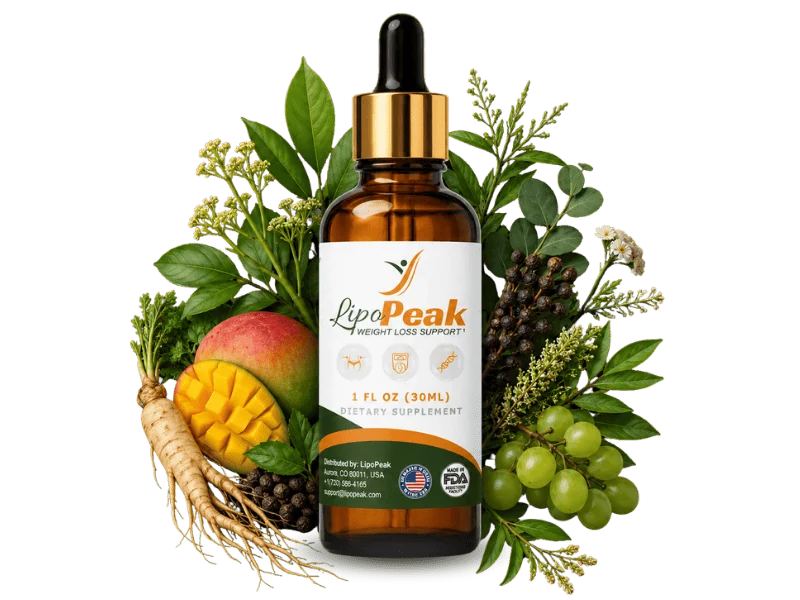
LipoPeak is a green-tea- and cayenne-led thermogenic blend rather than a dedicated "GLP‑1 booster," and it is more honest to describe it that way. Its better-supported ingredients act on fat oxidation and thermogenesis, which is a different and generally better-evidenced mechanism than the speculative GLP‑1 claims attached to some products. If GLP‑1 support is your specific interest, judge any product — LipoPeak included — by what its actual ingredients can do, not by which hormone happens to be fashionable.
How far the natural GLP-1 evidence really goes
The review literature is candid about its own stage of development. Boosting GLP-1 by Natural Products catalogues plant compounds reported to influence GLP-1 secretion or signalling, and a comprehensive pathway review of berberine-induced GLP-1 traces the proposed mechanism in detail. Both are mechanism papers. Neither is a weight-loss trial, and that distinction is the single most important thing to carry away from any “natural GLP-1” product page.
The nearest thing to a human outcome study in this space is about fibre rather than a branded extract: Chambers and colleagues in Gut delivered propionate, a fermentation product of dietary fibre, to the colon and found it prevented weight gain and reduced intra-abdominal fat in overweight adults. That is a genuine result, and it is also a useful measure of scale — the honest comparison for these compounds is a high-fibre meal, not a prescription GLP-1 medication, whose effects are an order of magnitude larger and established in large randomised trials.
Treat “GLP-1 support” on a label as a mechanism claim, not an outcome claim. The compound with the most human data behind it is compared head-to-head in berberine versus green tea for weight loss, the fibre and fermentation route is explained in gut health and weight loss, and the realistic ranking of everything sold for hunger is in natural appetite suppressants and the real evidence.
The honest bottom line
Natural GLP‑1 support is a real but small idea. Berberine has the most behind it, cinnamon and ginger are plausible minor helpers for blood-sugar handling, and fermented green tea sits in an emerging space. All of them are modest, all of them depend on a solid diet and activity base to matter, and none of them is a substitute for the medications. If you use one, use it as an affordable nudge, give it two to three months, keep your meals working in the same direction, and involve a professional before combining anything with medication.
Sources
- NIH Office of Dietary Supplements — Dietary Supplements for Weight Loss
- Araj-Khodaei M, et al. Berberine-induced glucagon-like peptide-1 and its mechanism for controlling type 2 diabetes mellitus: a comprehensive pathway review. Arch Physiol Biochem. 2024. PMID 37921026
- Yaribeygi H, et al. Boosting GLP-1 by Natural Products. Adv Exp Med Biol. 2021. PMID 34981502
- NIH NCCIH — Green Tea: Usefulness and Safety
Frequently asked questions
Can supplements really raise GLP-1 naturally?
Some can nudge it. Compounds like berberine, cinnamon, ginger and fermented green tea have been studied for modestly influencing GLP-1 secretion and blood-sugar handling. The changes are real but small and inconsistent between studies, and they are nowhere near the sustained, high-level GLP-1 activity produced by prescription medications.
Are natural GLP-1 boosters as good as Ozempic?
No. No supplement replicates semaglutide or liraglutide. The medications deliver a strong, steady pharmacological signal that powerfully reduces appetite, while supplements produce a minor, food-level effect. The upside of supplements is cost — often 80 to 90 percent lower — and easier access, but the results are modest and heavily dependent on diet and activity.
Which foods increase GLP-1 the most?
Meals high in protein, soluble fibre and healthy fats tend to stimulate GLP-1 release more than refined-carbohydrate meals, because GLP-1 responds to nutrients reaching the lower gut. Foods and additions studied in this context include legumes, oats, eggs, olive oil, and fermented foods. Eating pattern matters far more than any single food.
Is it safe to combine GLP-1 supplements with medication?
Not without professional advice. Ingredients that affect blood sugar — berberine and cinnamon in particular — can add to the effect of diabetes medication or a prescription GLP-1 drug and push blood sugar too low. Always talk to a doctor or pharmacist before combining supplements with any medication or if you manage a health condition.
See the full LipoPeak review
The complete ingredient breakdown, the honest limitations, and today's pricing on the official store.
Get Offer