LipoPeak Reviews: What They Tell You and What They Miss
Searching for LipoPeak reviews usually returns two kinds of page: testimonials published by the seller, and affiliate articles that reprint them. Neither answers the question you are actually asking. Here is what customer feedback on a supplement like this can honestly establish, what it cannot, and what the published research on the named ingredients reports instead.
Published 3 September 2026 · By the LipoPeak Editorial Team · Reviewed against the primary nutrition literature · General information, not medical advice.
What do LipoPeak reviews actually tell you?
LipoPeak reviews are almost entirely manufacturer-published testimonials, which means they are selected, unverified and uncontrolled. They are reasonable evidence about ordering, shipping, taste and refunds, and poor evidence about whether the formula works. For that question you have to read the research on the ingredients, where the measured effects are real but small.
- Seller-published testimonials are marketing, not data.
- No published trial exists of the finished LipoPeak formula.
- The ingredient research supports small effects, not transformations.
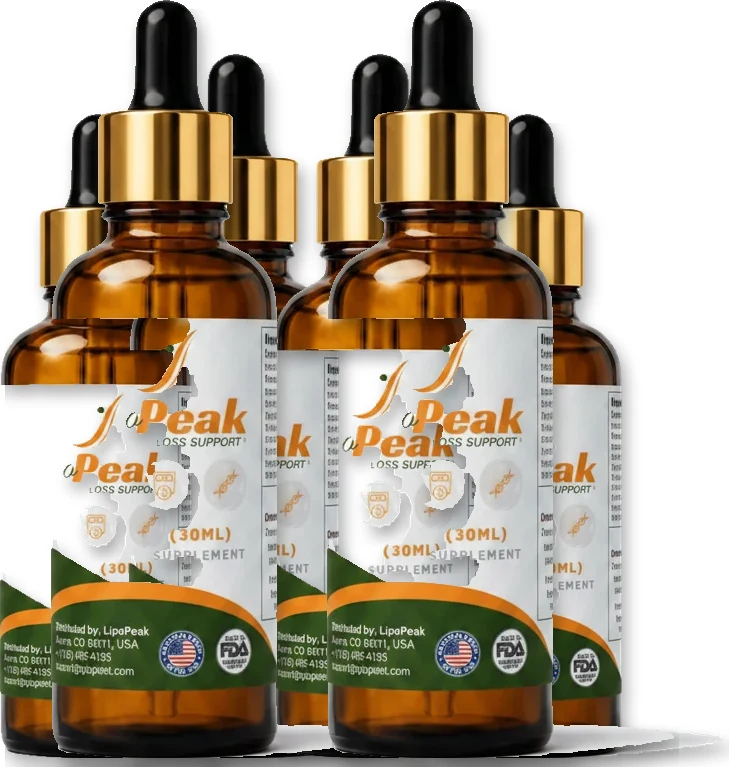
Where LipoPeak reviews come from, and why that matters
Almost every LipoPeak review you can find traces back to one of two places: the official sales page, or an affiliate article quoting it. That is normal for a direct-to-consumer supplement sold through a single online store rather than through pharmacies and marketplaces, and it has a specific consequence. There is no large pool of independent purchase-verified feedback to average, so the sample you are reading was chosen by the party with the strongest interest in how it reads.
This site is an independent affiliate publisher, not the manufacturer, and we earn a commission if you buy through our links — which is exactly the incentive you should assume is behind any glowing supplement write-up, including ones that look editorial. The US Federal Trade Commission's advertising guidance for dietary supplements is explicit that testimonials do not substitute for competent and reliable scientific evidence, and that typical results have to be disclosed. Read every review, ours included, with that standard in mind.
Why supplement testimonials are weak evidence that a product works
The problem is structural, not moral. A testimonial has no control group, so there is nothing to compare the result against. It has no blinding, so expectation shapes the reported experience. It arrives through a filter, because people who feel nothing rarely write in and sellers rarely publish those who do. And it is almost always confounded: people start a weight-loss supplement in the same week they start eating better, walking more and sleeping earlier, and the supplement gets the credit for all of it.
Two more effects finish the job. Regression to the mean means people tend to buy at their worst point and improve afterwards regardless of what they take. And the first weeks of any diet change are dominated by glycogen and the water bound to it, which produces a fast early scale drop that is not fat — the mechanism explained in water weight versus fat loss. Put those together and a product that does nothing at all will still generate a steady stream of delighted, entirely sincere reviews.
What a LipoPeak review can legitimately tell you
Customer feedback is not worthless; it is just evidence about a different set of questions. Reviews are genuinely useful for the operational side of a purchase: whether the order arrived, how long shipping took, whether the packaging was intact, what the liquid tastes like, whether the dropper is easy to use, and above all whether the refund process worked as advertised when someone asked for their money back.
They are also useful for spotting patterns in tolerance. Repeated mentions of a specific complaint — stomach upset, an unpleasant aftertaste, jitteriness in the afternoon — are worth noticing, because those are things a person can report accurately without a control group. What no reader can extract from testimonials is an effect size. “I lost 22 pounds” tells you what happened to one person over some unknown diet, not what the product contributed.
What the research on LipoPeak's ingredients actually shows
Since the finished formula has never been tested in a published trial, the defensible way to assess it is ingredient by ingredient. The label leads with green tea leaf extract and cayenne pepper extract, and those are the two with the most human data. On weight, the Cochrane review Green tea for weight loss and weight maintenance in overweight or obese adults concluded that green tea preparations produced a small change that was not clinically important. On thermogenesis, a systematic review and meta-analysis of capsaicinoids in healthy adults found a real but modest effect, echoing the earlier pooled analyses in Ludy and colleagues, Chemical Senses, which reported small effects on energy intake and energy expenditure.
The closest thing to a test of a product rather than a compound is a 2023 study of chronic thermogenic dietary supplement consumption, which found that four weeks of a multi-ingredient thermogenic maintained resting energy expenditure but produced no difference in body composition. That is the honest ceiling for this category, and it is the number every testimonial implicitly contradicts. The rest of the LipoPeak label — gymnema, raspberry ketones, chromium, L-carnitine and L-tyrosine — ranges from thinly studied to, in the case of raspberry ketones, essentially without supportive human weight-loss evidence at all. The full ingredient-by-ingredient breakdown sits on our LipoPeak ingredients page.
Is LipoPeak a scam?
On the evidence available, no. LipoPeak is a real liquid supplement with a named ingredient list, bottled in the United States and sold through an official store that states a 60-day money-back guarantee. Nothing about that pattern matches fraud. But “not a scam” is a much narrower statement than “works,” and conflating the two is how this category disappoints people.
The realistic risk here is not that your money vanishes. It is that you pay for a bundle, take it faithfully for two months, and cannot tell whether it did anything — because the effect size in the underlying research is small enough that you would not be able to. That is a marketing problem rather than a criminal one, and it is the same problem catalogued across the category in weight loss supplement myths debunked.
What reviews cannot tell you about safety
Testimonials are a particularly poor safety instrument. Adverse effects are under-reported, rarely published by sellers, and almost never linked back to a cause by the person experiencing them. The documented cautions for this ingredient class come from the literature instead: caffeine can disturb sleep and raise heart rate at higher intakes, concentrated green tea extract carries rare liver-injury reports, and capsaicin can irritate the stomach. Those risks are laid out properly in our fat burner side effects and safety checklist.
Anyone pregnant, nursing, taking prescription medication — particularly for blood sugar, blood pressure or the heart — or managing a health condition should talk to a healthcare professional before starting any thermogenic formula. A hundred positive reviews do not change that, because the people for whom it went badly are not the ones writing them.
A five-minute check before you buy any weight loss supplement
The same short routine works for LipoPeak or anything else in the aisle. Read the label for named ingredients with disclosed amounts rather than a proprietary blend. Check whether the amounts are anywhere near the doses used in research. Look up one or two ingredients on an independent source such as the NIH Office of Dietary Supplements fact sheet on weight-loss supplements rather than on the sales page. Confirm the refund terms and, specifically, the window and who pays return shipping.
Then apply the test that matters most: if the product were removed from the plan, would the plan still work? If the answer is no, the plan is the problem. The arithmetic behind that is worked through in do fat burners work without exercise, and the mechanism ceiling for thermogenics is quantified in how thermogenic fat burners actually work.
What would change this assessment
We would revise this page on three kinds of evidence, and only those. A published randomised controlled trial of the finished formula, however small. A disclosed supplement facts panel showing per-serving amounts that sit inside the studied ranges for green tea catechins and capsaicinoids. Or a body of purchase-verified third-party feedback large enough to show a consistent pattern, including the complaints. Until one of those exists, everything written about whether LipoPeak works — here or anywhere else — is inference from ingredient research rather than a measurement of the product.
The honest bottom line
LipoPeak reviews are worth reading for logistics and worthless for efficacy. The product appears to be a legitimate liquid formula built on two ingredients with genuine, small effects on energy expenditure and appetite, sold with a stated 60-day guarantee. If you buy it, buy it as a minor addition to a calorie deficit you are already running, take it consistently for 8 to 12 weeks, and measure the weekly trend rather than a single morning — the pace to expect is set out in our realistic weight loss timeline. If you are buying because a testimonial promised something the research does not support, the guarantee window is the most valuable thing on the page.
Sources
- NIH Office of Dietary Supplements — Dietary Supplements for Weight Loss
- FTC — Dietary Supplements: An Advertising Guide for Industry
- Jurgens TM, et al. Green tea for weight loss and weight maintenance in overweight or obese adults. Cochrane Database Syst Rev. 2012. PMID 23235664
- Irandoost P, et al. The effect of Capsaicinoids or Capsinoids in red pepper on thermogenesis in healthy adults: A systematic review and meta-analysis. Phytother Res. 2021. PMID 33063385
- Ludy MJ, et al. The effects of capsaicin and capsiate on energy balance: critical review and meta-analyses of studies in humans. Chem Senses. 2012. PMID 22038945
- Siedler MR, et al. Chronic Thermogenic Dietary Supplement Consumption: Effects on Body Composition, Anthropometrics, and Metabolism. Nutrients. 2023. PMID 38004200
Frequently asked questions
Are LipoPeak reviews trustworthy?
Treat them as marketing copy until proven otherwise. The testimonials shown beside a supplement are selected and published by the seller, are not independently verified, and are collected without a control group, so they cannot separate the product from the diet change, the season or the placebo effect. Reviews are useful for delivery, billing and refund experience. They are weak evidence about whether an ingredient works.
Does LipoPeak actually work for weight loss?
There is no published trial of the finished LipoPeak formula, so the honest answer is that nobody knows how the product performs as a product. What can be said is what the research on its named ingredients shows: green tea catechins and capsaicin produce small, measurable effects on energy expenditure and fat oxidation, and reviews of whole thermogenic supplements report metabolic changes without dramatic shifts in body composition.
Is LipoPeak a scam?
On the available evidence, no. LipoPeak is a real liquid supplement with a named ingredient list, sold through an official store that states a 60-day money-back guarantee. That is a narrower claim than saying it works. The realistic risk with this category is not fraud but disappointment, because the effect sizes in the underlying research are small and the marketing implies they are large.
How long should you try LipoPeak before deciding?
Give it 8 to 12 weeks of consistent daily use, with your food intake and sleep actually under control, and judge the weekly average rather than a single morning weight. The first fortnight is dominated by glycogen and water shifts that flatter any product. Note the seller's 60-day money-back window, because it decides how long you have to make a refund decision.
See the full LipoPeak review
The complete ingredient breakdown, the honest limitations, and today's pricing.
Get Offer